The fixed kit: signs, riders, frames, tablet stand, and how long each one lasts
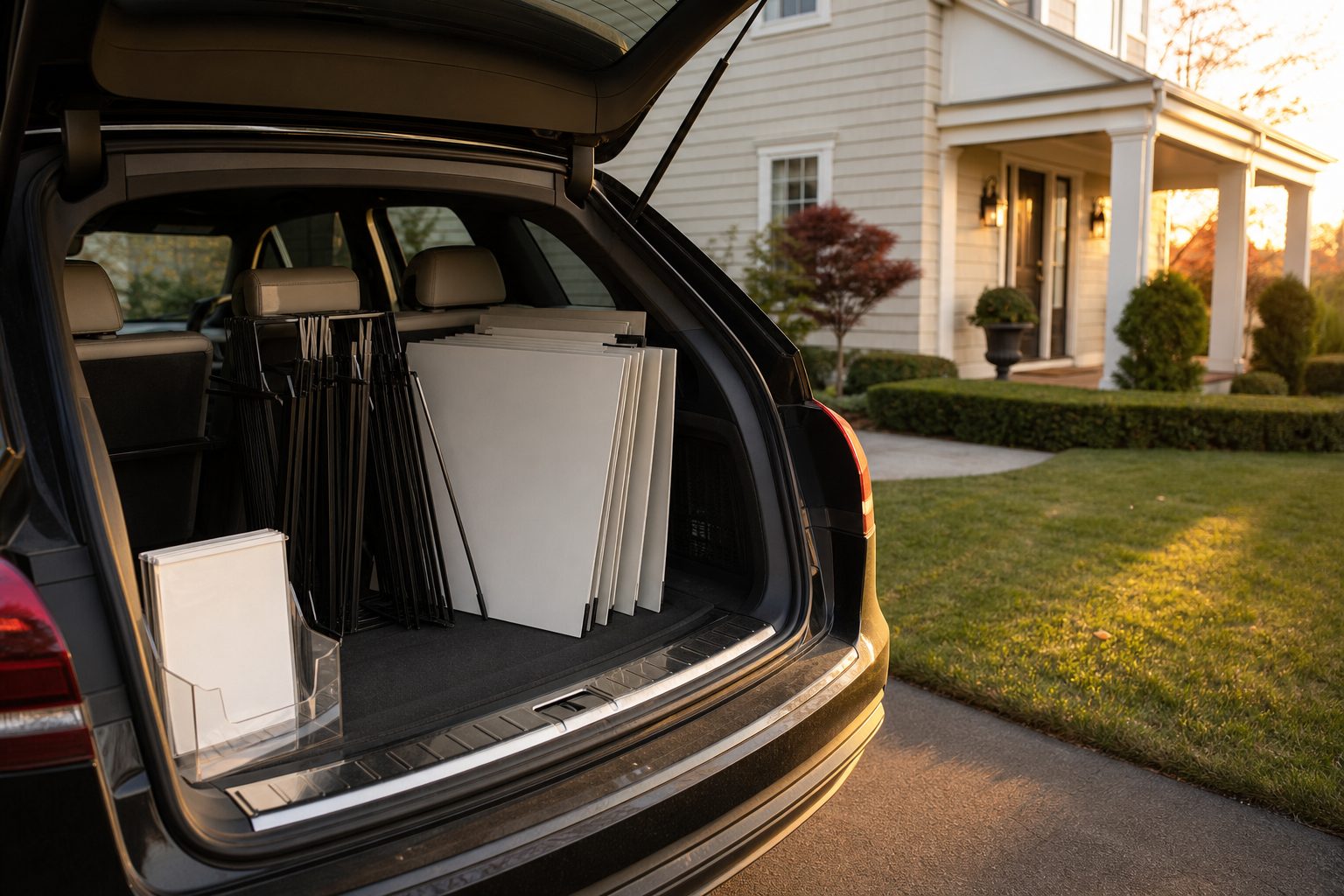
Every open house starts with a set of physical assets. Most solo agents and small teams use a kit they reuse weekend after weekend: yard signs, directional arrows, branded riders, weather-resistant frames, and a sturdy stand for their sign-in tablet. These items see a lot of use, but they do not last forever.
Signs and frames are often made of corrugated plastic or metal. Depending on your climate and how often you host, expect them to last two to three years before fading, cracking, or breaking. Some agents get by with the same set for longer, but most replace at least a few pieces each year due to theft, wind damage, or wear.
A typical starter kit includes ten to twelve directional signs, two to four frames, several riders with custom messages, and a tablet stand. Replacement costs vary by quality, but most agents buy signs in bulk to keep costs down. Riders change less often but need updating when your branding or contact details change. Most tablet stands are built to last a few seasons, but cheaper ones can loosen or break after a year of folding and transport.
To compute your annual fixed kit cost: total up the purchase price for each item, estimate its usable lifespan in years, and divide. For example, if you pay $240 for a set of signs and expect them to last three years, the annual cost is $80. Do the same for frames, stands, and riders, then sum the results for your yearly fixed kit expense.
Keep reading: Broker Opens vs Public Open Houses: What Each Does for a Listing
Per event costs: flyer printing, refreshments, booties, batteries, and paper goods
Expenses stack up quickly for each open house, even before a guest walks in. The most visible is flyer printing. Most agents hand out property sheets or brochures that showcase the home, often in color. Print costs depend on the number of visitors you expect and whether you use a home printer or a print shop.
Next, refreshments. Bottled water, lemonade, cookies, or snack packs encourage visitors to linger and leave a good impression. Some agents skip this to save, but it is standard in many markets. The exact spend depends on your approach, but even modest snacks for a dozen guests add up over the season.
Booties and paper goods are another line item. Disposable shoe covers keep floors clean, especially in winter or muddy months. Paper towels, napkins, trash bags, and a pack of wipes always end up on the checklist.
Do not forget batteries for your tablet or Bluetooth speaker. Some agents use plug-in power, but outlets are not always handy in a vacant house. Keeping a stash of AA or backup chargers prevents hiccups.
To calculate per event cost, total the flyers printed for that property, add the price of snacks and drinks, and include estimates for consumables. This gives you a solid baseline per open house, separate from your big-ticket kit items.
Paid promotion: portal boosts, social ads, and a mailer to the surrounding block
Getting people in the door often means spending money to promote the open house beyond the MLS. Many agents pay for featured listings on real estate portals, targeted social media ads, or even a round of postcards to nearby homeowners.
Portal and social media boosts
Listing portals offer options to "boost" an open house, making it more visible for a flat fee or per day. Prices vary, but the effect is short-lived. Social ads on platforms like Facebook or Instagram let you target local buyers and renters. Most agents run ads for a few days leading up to the event with a capped daily spend. The return depends on the quality of your creative and your targeting.
Mailer drops
A postcard or door hanger campaign to the surrounding block is another common tactic, especially for higher-end listings. Printing and postage is usually the biggest cost. Many agents use mailing services with minimum order sizes, so solo agents may spend more per piece if their farm is small.
When calculating promotion costs, keep each channel separate. Sum up your portal boosts, social ads, and mailers for each event, and track whether the extra spend brings in new faces or just more of the same neighbors.
Keep reading: Open House Follow Up Mistakes That Break Call and Text Rules
Your hours: setup, hosting, teardown, and follow up, priced at an honest rate
Time is the hidden cost in every open house. For solo agents and two-person teams, the work starts well before guests arrive and continues long after the last visitor leaves.
Setup and teardown
Most agents devote at least an hour to preparation: loading the car, placing signs, arranging brochures, and prepping the house. After the event, the process repeats in reverse, with another hour gathering supplies and resetting the property.
Hosting
The main event runs two to four hours, depending on your market and the listing. Some agents overlap or stagger times to fit in multiple houses, but each one requires presence from start to finish.
Follow up
After the open house, follow up begins. This means texting, emailing, or calling every guest who left contact information. A thorough follow-up sequence can take thirty minutes to an hour per event, especially if you personalize your outreach or schedule appointments.
To value your time, assign an hourly rate, what you could earn from a listing, a buyer consult, or another real estate task. Multiply the total hours per event by this rate. For example, if you spend five hours in total and value your time at $50 per hour, count $250 per open house as your labor cost.
Mileage: the IRS standard business rate and which trips actually qualify
Driving to and from the open house adds up over the season. The IRS allows you to deduct business mileage at a standard rate, which is updated each year. Most agents use this rate to track vehicle costs for tax purposes rather than tallying gas receipts or maintenance separately.
Which miles count? The key rule is that any trip directly related to the open house qualifies: driving from your office or home to the property, running to pick up supplies, or placing and collecting signs. Personal errands or commuting to your regular office do not count.
To compute mileage cost per open house, add up the round-trip miles for each event, plus any extra trips for setup or teardown. Multiply the total by the IRS standard rate. This gives you a fair estimate of your vehicle cost for each event, regardless of what you actually spend at the pump.
See how FoyerSignIn handles this for residential real estate
Turning total spend into cost per named visitor and cost per appointment set
Once you have all your costs, kit, per event, promotion, time, and mileage, add them to find the full investment for one open house. This is your total spend for the day. The next step is to connect this number to your actual results: how many real leads did you get, and how many turned into appointments?
Counting named visitors
Not every guest writes down their name or contact information. Some only sign in as "John Smith" or skip the form altogether. For this calculation, count only those visitors who provide a real name and at least one way to reach them: phone number or email. This is your pool of "named visitors."
Appointments set
Of your named visitors, track how many agree to a follow-up: a buyer consult, a private showing, or a pre-approval meeting. This is the number of appointments set from that open house.
Divide your total spend by the number of named visitors to get your cost per lead. Divide by the number of appointments set for your cost per appointment. For example, if you spend $200 and get eight real leads, your cost per lead is $25. If you set two appointments, your cost per appointment is $100.
Tracking these numbers over several open houses will reveal which properties, neighborhoods, or promotion methods give you the best return.
The break even question: how many closings a year justify the Saturdays
All the math leads to the big picture: do open houses pay off in real business, or are they just a weekend routine? The answer depends on your average cost per open house, your conversion rate from lead to closing, and your typical commission.
Suppose your average open house costs $250 and you hold twenty a year, spending $5,000 in total. If your average gross commission from a closed buyer is $8,000, you only need one closing to break even. Anything above that is profit, not counting the intangible benefits: local exposure, market knowledge, and seller satisfaction.
But these numbers are not guaranteed. Conversion rates from open house visitors to actual clients can be low, especially in hot or slow markets. Track your personal results to see if your time and money could be better spent elsewhere.
The time it takes to collect and follow up with every guest matters too. Tools that automate sign-in, create quick reports for sellers, and handle basic buyer follow-up will not lower your upfront spend, but they increase your odds of capturing more real leads and booking more appointments from every open house.