Seventy two hours out: MLS open house entry, portal times, and neighbor invites
Three days before your open house, enter the event into your MLS. Double check that your listing's open house time and date are accurate and match across all portals. Most syndicate to consumer sites within a few hours, but it can take up to a day for changes to appear everywhere. If you edit the time later, some sites lag behind, which can frustrate buyers.
Next, pull addresses for immediate neighbors. A handwritten note or printed invite goes a long way toward building goodwill and word of mouth. Drop off a dozen on foot. Mention the open house hours and offer to answer questions about the sale. Neighbors who stop by often know buyers or are thinking of listing themselves.
If you use social media, schedule a post or a story for the morning of the event. Tag local neighborhood groups and cross-post if allowed. Brief Facebook Events or Instagram reminders can catch buyers scanning their phones for weekend plans.
Keep reading: Open House Safety Checklist for Agents Working Alone
The sign route: placement rules, HOA limits, and city right of way ordinances
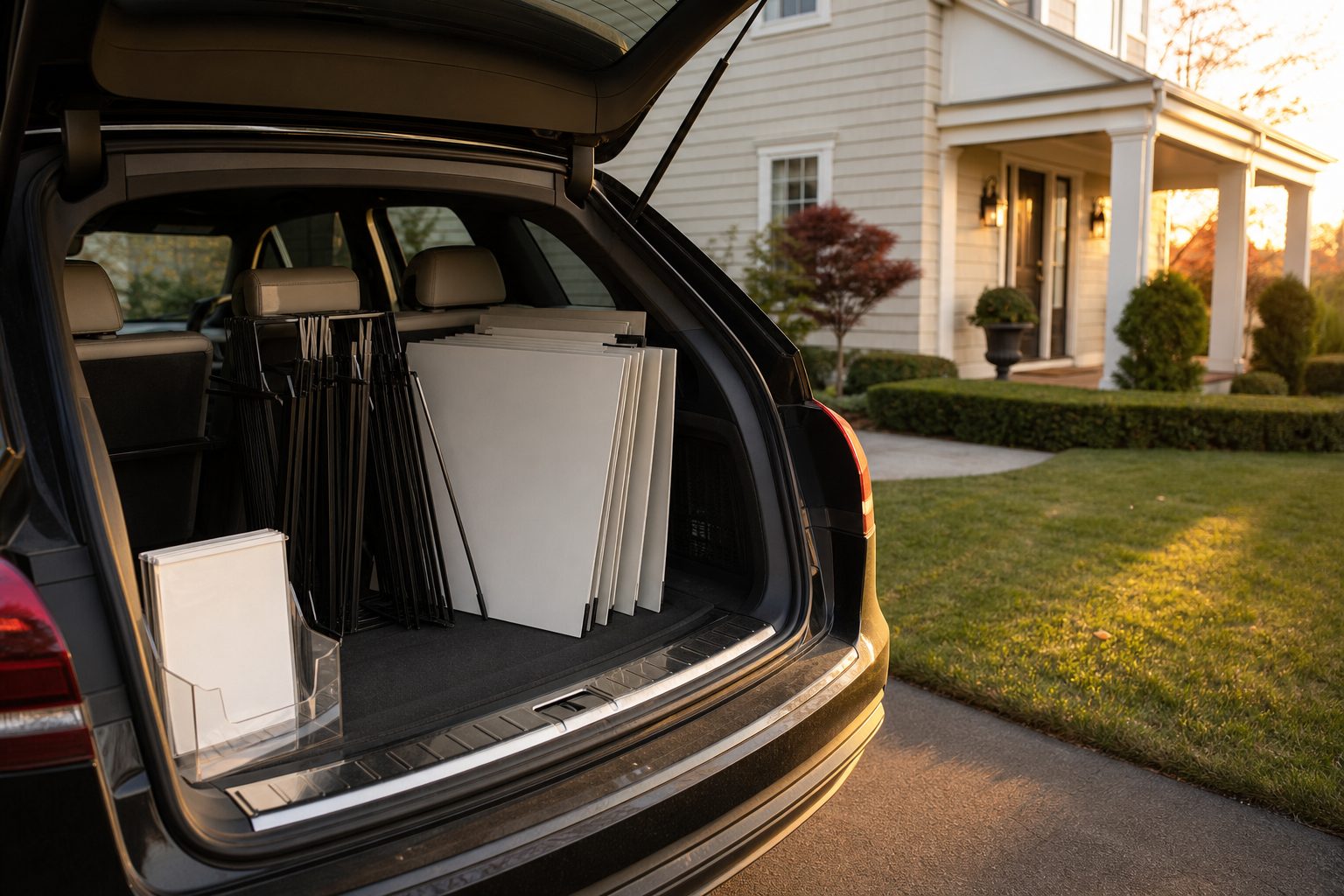
Plan your open house sign route the night before. Lay out your signs in the order you'll place them, grouping by intersection. Most agents find four to six signs enough for neighborhood streets. Start at the nearest main road and work inward, with arrows and visibility in mind. Put the first sign at the closest arterial intersection drivers will use to access the neighborhood.
Check for HOA sign rules. Many restrict signs to weekends, limit total number, or require a "no balloons" policy. Some want signs off the grass. If you're unsure, ask the management office or a board member. Violating these rules can mean losing sign privileges or drawing a fine.
Cities often ban signs in the median, on sidewalks, or in right of way strips between the curb and sidewalk. Place your signs just inside the yard line, away from traffic views. Avoid blocking driveways or creating hazards. Some cities pick up non-compliant signs by noon. If you are told to remove a sign, comply promptly.
Staging the entry table: sign in, flyers, disclosures, and where you stand
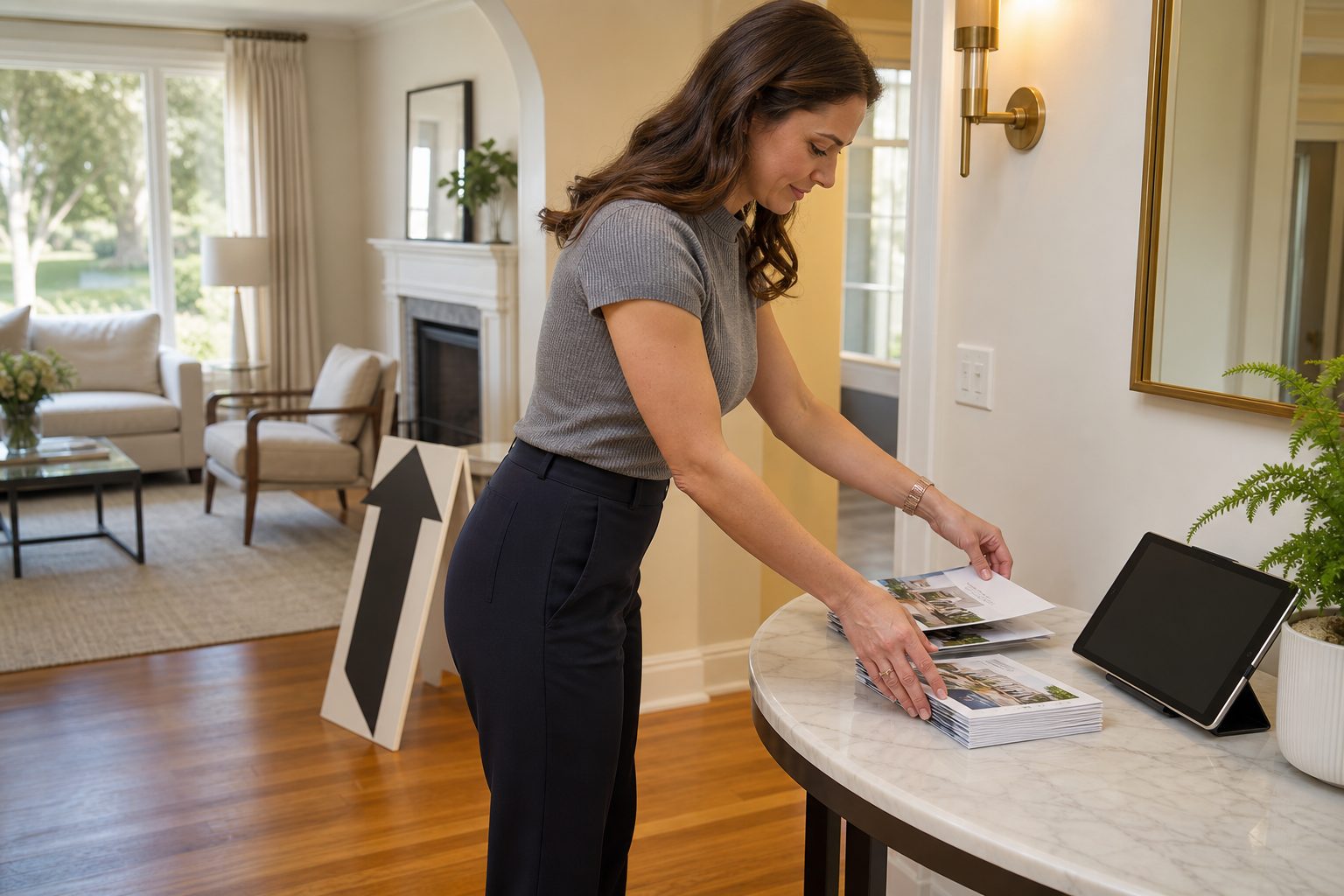
Set your table just inside the front door. You want it in the visitor's path but out of the entry swing. Ideally, use a folding table or console that looks tidy and holds a few items: your sign-in device, a stack of flyers, property disclosures, and a pen for notes.
Tablet Sign-In and Paper Backups
- Run your tablet on battery, with the screen angled up and brightness high. Make sure the sign-in app is ready to go before the first visitor arrives.
- Have a paper sign-in sheet ready in case of technical issues, but keep it turned over or off to the side. Tablets tend to get more complete contact info.
Flyers and Disclosures
- Display your property flyer in a visible stack. Include basic details: price, square footage, beds and baths, and standout features.
- Offer all required disclosures up front, such as lead paint or seller property condition forms. Some agents staple these to the flyer or keep them in a labeled folder.
Stand to the side or just behind the table, not blocking the entry. Greet guests as they come in, but avoid crowding them. You should look approachable but not in the way.
Keep reading: The Cost of an Open House and How to Compute Cost Per Lead
The first sixty seconds with a visitor at the door
Smile and say hello before asking anything else. Invite visitors to come in and let them know if they need to remove shoes or use booties. Keep your script simple: "Welcome. Just sign in here and I'll get you a flyer." If they hesitate, explain that sign-in is for seller security and follow-up if they have questions.
If the visitor is with children or a partner, let them all come in before starting your introduction. Once signed in, hand them a flyer and point out one unique feature, maybe a new kitchen or a large backyard. This gives them something to talk about as they start their walk-through.
Do not pitch right away. Instead, offer a brief orientation: "The main living areas are to the left, bedrooms down the hall, and let me know if you want to see the backyard." This keeps things conversational and keeps you from sounding pushy.
Working the house while people wander: sight lines and useful conversation
While visitors tour, position yourself where you can see the front door and most of the main living space. In smaller homes, this is often the kitchen or living room. In larger homes, stand where you have good sight lines to entry and exit points.
Never follow buyers from room to room. Give them space to talk privately. If someone lingers or asks questions, stay within earshot but not on their heels. This shows you respect their process but are available.
Ask open-ended questions that build rapport: "What brings you out today?" or "Are you looking for something specific?" Listen for buying signals, like questions about schools, taxes, or timing. When you hear these, offer detailed answers, and mention any features that match their needs.
Keep the conversation natural. Share insights about the neighborhood or recent upgrades. If someone seems interested, offer to schedule a private showing or connect them with lender resources. Always jot down notes after each visit, especially if you promise a follow-up.
See how FoyerSignIn handles this for residential real estate
Handling the unrepresented buyer and the agent who brings clients
Unrepresented Buyers
If a visitor is not working with an agent, be clear but tactful. Explain your role: "I represent the seller, but I'm happy to answer questions about the property and the process." Offer your card and ask if they want to see other homes in the area. If they show real interest, discuss buyer agency before getting into negotiations.
Make a note of any buyers who plan to make an offer without an agent. In most states, you can write the offer as a transaction broker or dual agent, but disclosure rules vary. If your brokerage has specific forms, have them ready.
Agent with Clients
When another agent brings buyers, greet everyone and check if the agent has registered their clients. Some brokerages require a sign-in for agency tracking. Give the agent space to lead the tour and avoid interrupting. If the agent wants to discuss features with you, step aside from their clients so the conversation stays private.
Do not discuss offer terms or seller motivation in front of other agents or their clients. If asked, offer general market information but keep confidential details for private conversations later. Always thank the agent for bringing buyers and offer to send disclosures electronically if requested.
Lockup: lights, locks, lockbox, sign pickup, and the seller text
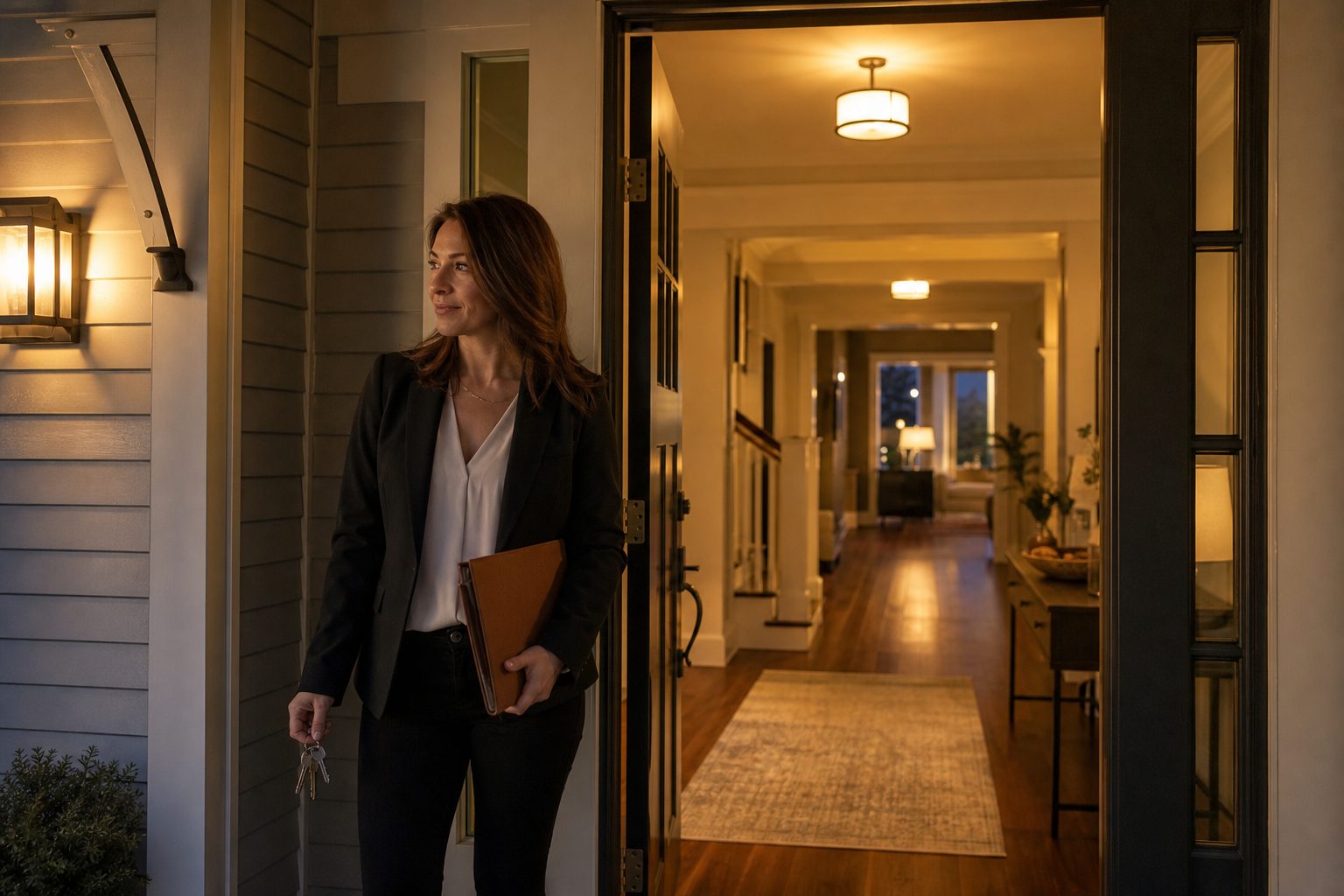
Once the last visitor leaves, start your closing routine. Walk through the house in the same order every time so you do not miss anything. Turn off lights in rooms as you go, check that windows are latched, and close any interior doors you opened earlier. Reset thermostats if you changed them for comfort during the open house.
Double check exterior doors. Lock them from inside and test each handle. If you used a lockbox, put the key back and scramble the code. Secure any garage or side doors that might have been used for access. If you moved any furniture or décor for staging, put it back as you found it.
Head out on your sign route as soon as you leave. Pick up each sign in the order you placed them, watching for signs that might have blown over or been moved by neighbors. Keep a towel or gloves handy if the ground is wet.
Before you leave the property, send a quick text to the seller. Let them know the open house is finished, the house is secured, and thank them for letting you show the home. Mention any action items, like missing keys or unusual visitor feedback, so they are not surprised later.
Monday morning: the seller report and the buyer follow up sequence
On Monday, prepare your seller report. Include a count of visitors, a summary of feedback, and any standout comments. Note whether any buyers seemed interested in writing or requested a follow-up. Attach scanned sign-in sheets or screenshots from your tablet app if the seller likes details.
Keep your report short and focused. Sellers care most about how many people came through and what buyers thought. Mention traffic flow, how long visitors stayed, and if any agents or neighbors offered helpful feedback. If you picked up new buyer leads or see signs of a second showing, mention that too.
For buyer follow-ups, start with a thank you message. Many agents use a three-touch sequence: a same-day email or text, a midweek check-in, and a third message near the end of the week. Tailor your message based on what the visitor said at the open. If someone requested disclosures or wanted to see a similar property, send those materials right away.
Automated follow-up tools let you schedule these touchpoints so you do not have to remember each one. A good sign-in app can trigger seller reports and buyer follow-up from the same visitor list, reducing your manual work and helping you focus on active prospects. For agents running solo or with a small team, this kind of system keeps open house tasks manageable and helps you look professional from first greeting to final report.