Before you accept the assignment: vetting the listing, the street, and the hours
Every safe open house starts with the agent's decisions before the sign goes out front. Before you agree to host alone, review the property and the neighborhood. Look up recent police activity in the area using city or county records. Many agents call the local precinct for a quick background. If you have doubts about the safety of a street, due to lighting, visibility, or previous incidents, bring them up with the listing broker or owner, and request an adjustment or a second person present.
Pay close attention to the time slot. Daylight hours provide better visibility and reduce risk. If the listing is set for late afternoon or after sunset, check that exterior lights are functional and ask about the property's lockup routine. Some agents only agree to weekend midday hours when working solo. Trust your judgment: if a time or place feels off, it probably is.
Keep reading: The Cost of an Open House and How to Compute Cost Per Lead
The pre open house walkthrough: exits, blind rooms, basement stairs, and cell signal
Arrive at least half an hour early to walk every part of the property. Find and unlock all exits: front, back, side doors, and sliding glass doors. Review how each lock operates. Make sure none of the exits are blocked by furniture or landscaping. Map out the quickest route from each main room to an exit. Mentally rehearse using these routes if you need to leave quickly.
Survey each room for hidden corners and blind spots. Pay special attention to bedrooms at the back of the house, utility rooms, and any area that is not visible from the main entry. Open all closet doors and interior doors. Check basement stairs for sturdy handrails and working lights. If the house has a second story, be aware that noise upstairs can mask movement on the main floor. Confirm your phone gets a strong cell signal in every part of the house, including the basement and garage. If not, plan to stay in areas with reliable reception.
Setting the door table so a visitor can never box you in
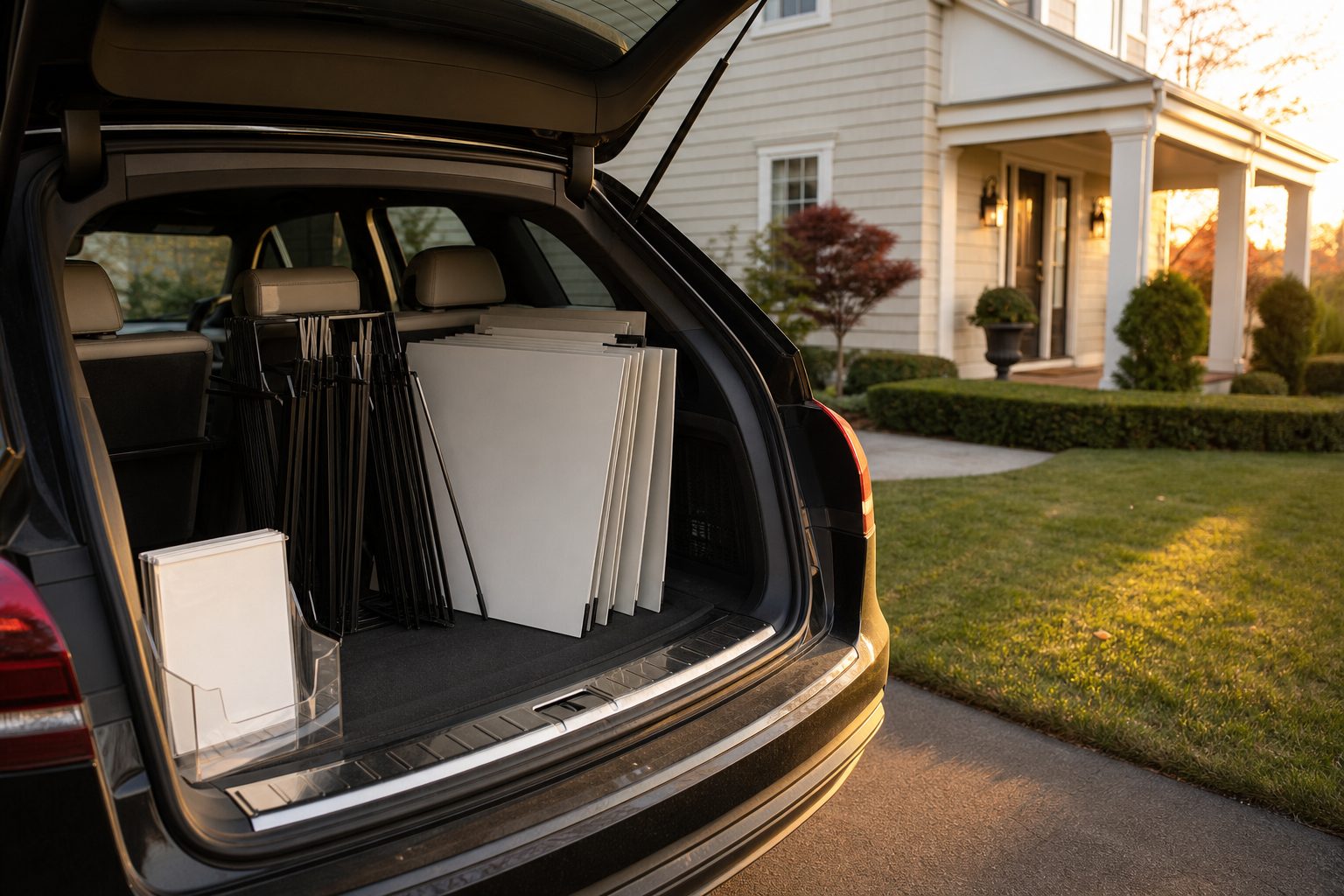
The door table is your first line of control. Place your table or stand close to the main entrance, with a clear view of the walkway and driveway. Never set up with your back to the door. Angle the table so you can see who approaches, and so visitors must cross your line of sight to enter. Keep the area behind your table clear of chairs or bags. You want a direct, unimpeded path to the exit at all times.
If you use a tablet or sign-in sheet, secure it to the table so you are not tempted to step away if someone tries to distract you. Only keep one chair at the table, your own. If a visitor tries to stand between you and the door, politely step aside to maintain your position closest to the exit. This small detail makes a major difference if a situation changes.
Keep reading: Broker Opens vs Public Open Houses: What Each Does for a Listing
Using the sign in as a safety record, not only a lead record
Every open house visitor should sign in before touring the property. The sign-in serves two roles: it collects leads, and it creates a record of who was present and when. Require at least a name and a phone number. If someone refuses, you are not obligated to allow them inside. Many agents phrase it as "office policy" or "for insurance purposes."
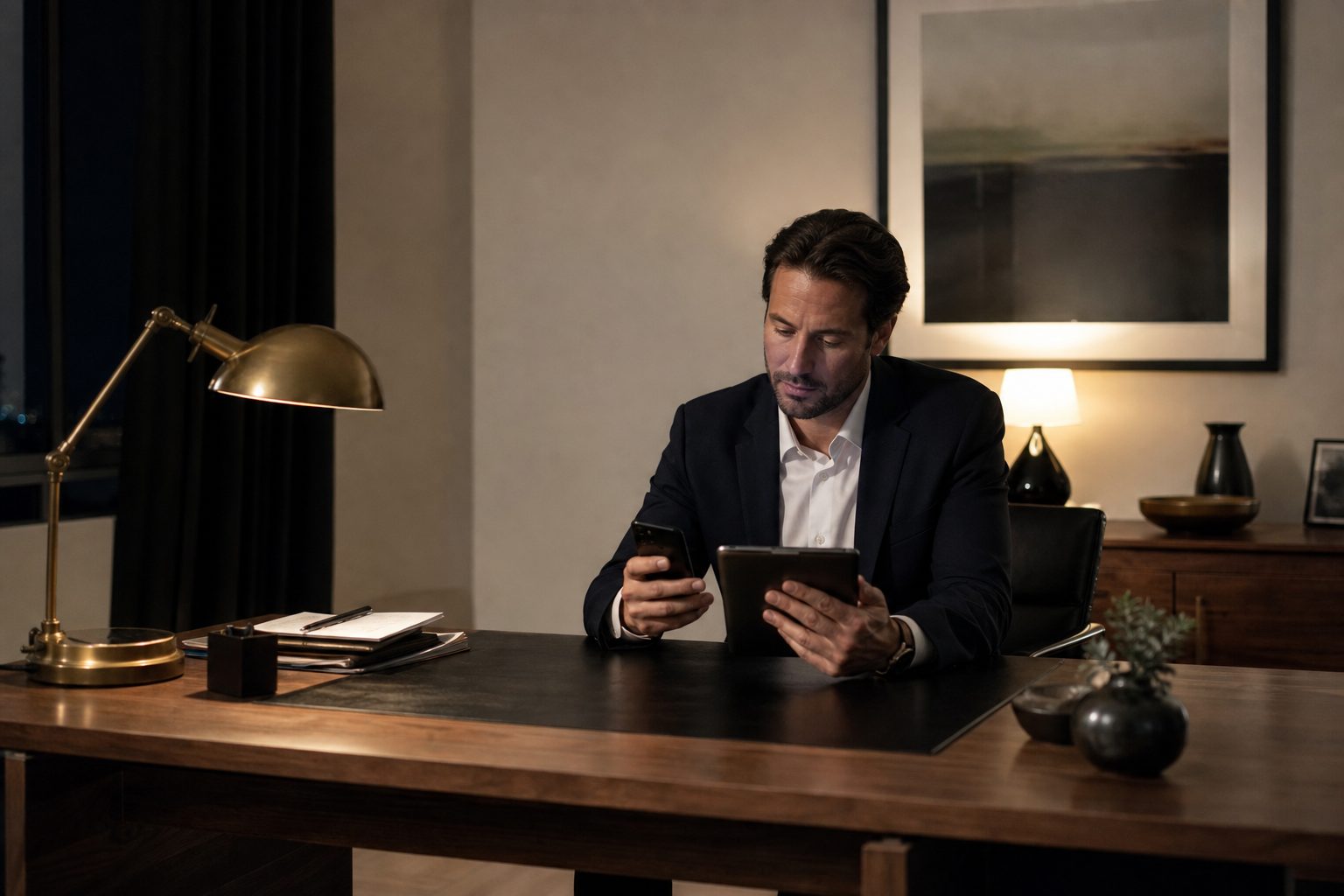
Digital sign-in tools have advantages for safety. A tablet records a time stamp and often captures partial information even if someone enters fake data. If you are using a paper sheet, photograph it at intervals and text the image to a trusted person offsite. Keep an eye on the list as visitors arrive and leave. With digital sign-in, you can check back later to verify exactly when someone signed in, which helps if there's ever a dispute or concern.
Check in calls, shared location, and a code word with a partner or spouse
Set up a check-in schedule with someone you trust: a family member, friend, or another agent. Text or call when you arrive, when visitors enter, and as you close up. Some agents set an hourly alarm as a reminder. Share your live location using your phone's GPS. Most smartphones allow you to share your location for a set period, such as during an open house window. This step is especially important if you are working in an unfamiliar area.
Establish a code word or phrase to use if you need help but cannot speak freely. For example, "Can you check the blue folder in my car?" signals your contact to call for assistance. Agree in advance on what action your contact will take if they receive the code word, whether it is to call you, call 911, or come to the property. Do not skip this step, even if you feel comfortable. Emergencies are rare but unpredictable. This habit turns safety into routine, not an afterthought.
See how FoyerSignIn handles this for residential real estate
Room by room protocol when a visitor asks for a private tour
Keep the tour public and visible
If a visitor requests a private walk-through, suggest touring together, but always maintain your position near the door or hallway. Avoid entering rooms first. Let visitors lead, while you remain by the threshold. This keeps both your exit and your sight lines clear. If there are multiple visitors, keep them within your view at all times. Never allow yourself to be separated from the main group, especially in homes with multiple levels or large footprints.
Use talking points as control tools
Keep conversation active, and use open-ended questions. This keeps you engaged and aware of the visitor's intentions. If you ever feel uncomfortable, excuse yourself to "check on another guest" or to "grab a flyer from the front table." Carry your phone in your hand, not your bag or purse, during all tours. In certain cases, some agents keep a personal safety device (such as a whistle or alarm) in a pocket.
Trust your instincts if something feels off. You can end the tour at any time. Do not worry about seeming rude, your safety is more important than a potential sale. Many agents find that a direct but polite approach, such as "I'll stay here while you look around," sets the right boundary.
Closing alone after dark: lockup order and the walk back to your car
Shut down in a deliberate sequence
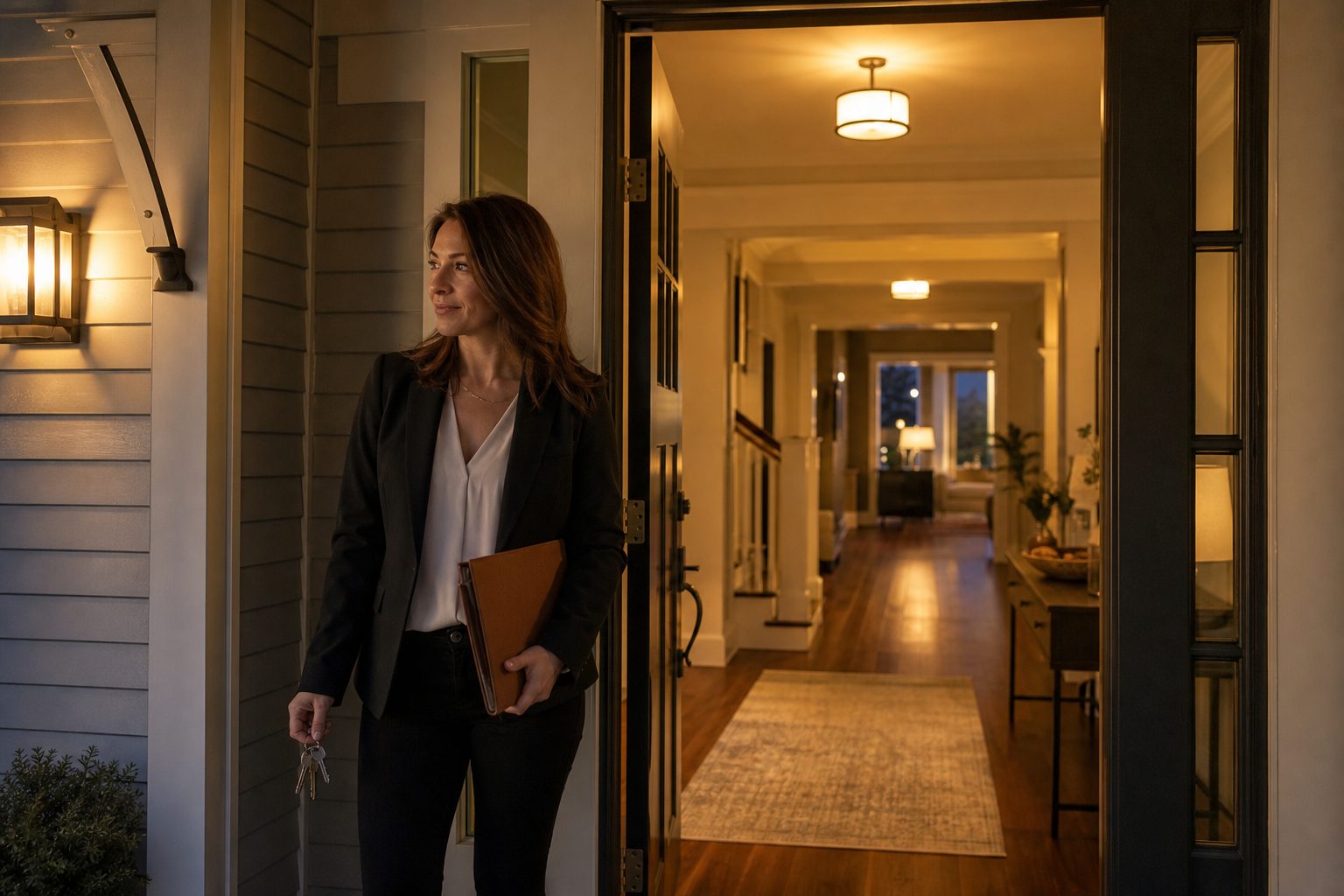
When the open house ends, start by walking through every room to make sure all visitors have left. Check closets, bathrooms, the basement, and the garage. Announce yourself as you enter each space if visibility is low. Turn on all available lights and leave them on until you exit. Lock back doors and windows first, then move to the front of the house. Always keep one exit, preferably the front door, unlocked until you are fully ready to leave.
Gather your belongings and double-check your phone, keys, and purse or briefcase. End your check-in location sharing only when safely at your car or in a secure area. If possible, park in a well-lit spot close to the house. Avoid lingering in the driveway or curb to check messages or respond to texts. Once you're in your vehicle with the doors locked, update your contact to confirm you are finished and safe.
Final steps for a secure exit
Many agents text a final photo of the locked front door or a quick note to their check-in partner. If you see anyone loitering near the property or your car, return to the house and call for assistance. Trust your instincts on timing: if the street is quiet, leave promptly. If there is activity outside, wait inside until the area clears or help arrives. Safety routines at close are just as important as during the event itself.
Professional agents working alone know the job demands more than a smile and a sign-in sheet. Clear routines, basic safety tech, and good habits make all the difference. Tools that combine digital sign-in, instant reporting, and automated follow-up let you stay focused on the people in front of you, while quietly supporting your safety behind the scenes.