The seven federal protected classes that govern every conversation at the door
Every agent working an open house should know the basics of the Fair Housing Act. This law protects buyers, sellers, renters, and visitors from discrimination based on seven protected classes. They are: race, color, religion, sex, national origin, familial status, and disability. These categories apply in every state and in every interaction, not just formal negotiations.
It is easy to focus on the listing and advertising side when thinking about compliance. But at the open house, the law follows you to the front door. Any conversation, question, or document you present can be scrutinized under fair housing rules.
This includes the first welcome, the questions on the sign in sheet, and the way you answer casual inquiries. Even if you intend to be friendly or helpful, anything that singles out or treats a visitor differently because of a protected class is prohibited.
Some states and cities add their own protected classes, such as sexual orientation, gender identity, or source of income. Review your local law, but always start with the federal seven when designing your open house approach.
Keep reading: How to Run a Weekend Open House Solo, From Setup to Lockup
Sign in fields that are safe to collect, and the ones that create exposure
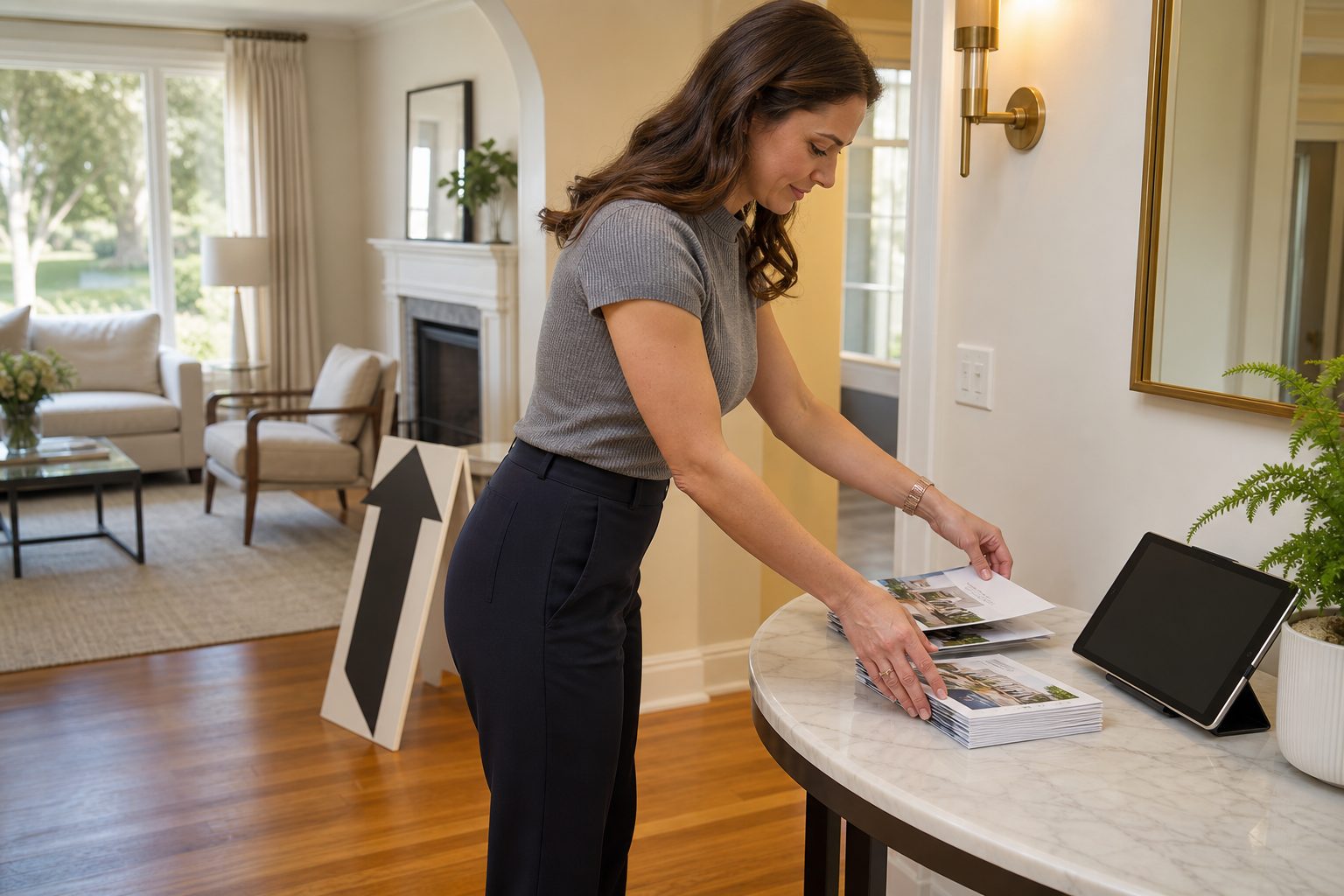
Open house sign in sheets are an industry standard, but every field you request can have legal consequences. The safest fields to collect are name, phone number, email address, and current address. These allow for follow up and provide useful context for both the agent and the seller.
Fields that ask about protected classes create risk. Never ask about race, ethnicity, religion, marital status, whether a visitor has children, their citizenship, or disability status. Even a field that seems benign, like "How many children do you have?" or "What is your country of origin?" can violate the law if it is used to screen or classify visitors.
Optional questions, but with caution
Some agents like to ask about timeframe to buy, financing plans, or first-time buyer status. These are generally safe, but take care not to phrase them in a way that hints at protected class information. For example, "Are you looking for a family home?" may be interpreted as steering based on familial status.
In most situations, avoid collecting demographic information unless it is required by a government program and you have clear instructions for how it must be gathered and stored. If the sign in sheet is digital, make sure access to the data is limited to authorized users only.
Steering: how questions about schools, safety, and the neighborhood go wrong
Steering is when an agent guides or influences a buyer's choices based on a protected class, even unintentionally. This is one of the most common ways fair housing complaints arise at open houses, especially when visitors ask about schools, crime, or the neighborhood.
Schools and school quality
Questions like "How are the schools here?" seem harmless. But if you answer in a way that implies only certain families or children are welcome, or if you reference the demographics of the school, you could be accused of steering. The safe route is to direct visitors to public sources, such as the school district website, and avoid offering personal opinions.
Safety and crime rates
Crime and safety questions are tricky. Agents cannot legally discuss the character of a neighborhood in a way that could be interpreted as suggesting who should or should not live there. Instead, point visitors to police department websites or other objective sources of information. Never say the area is "safe for families" or "not great for kids."
Neighborhood demographics
Even casual comments about the people who live nearby, such as mentioning that there are "lots of kids," "mostly working professionals," or "a large [ethnicity] community", are problematic. These statements can be used to allege that you are steering buyers based on familial status, race, or national origin.
Keep reading: Open House Safety Checklist for Agents Working Alone
Service animals, accessibility, and the ADA at a house open to the public
When you run an open house, the property becomes a place of public accommodation under the Americans with Disabilities Act (ADA). This means you must allow visitors with disabilities the same access as everyone else, and accommodate service animals, regardless of the seller's preferences or any "no pets" rule.
Service animals in open houses
You may ask only two questions about a service animal: Is this animal required because of a disability, and what work or task has it been trained to perform? You may not ask about the visitor's disability or require documentation. Emotional support animals do not have the same legal status as service animals under the ADA, but some state laws extend protections.
Reasonable accommodations
If a visitor needs a reasonable modification, such as a ramp or assistance opening doors, you must provide it if feasible. If the property is not accessible, explain the limitations respectfully and offer to provide additional access or information as needed. Document any requests and your response, but do not record the nature of the disability in your notes or sign in sheet.
Do not ask visitors if they have a disability or require modifications unless they bring it up first. Assume all visitors must be treated with equal access and dignity.
Writing visitor notes that help you sell without building a discrimination record
Open house notes are a useful tool for tracking buyer motivation, interest level, and follow up needs. But they can also create risk if they include details about a visitor's appearance, accent, family status, or other protected class attributes. In a dispute, these notes may be subpoenaed and used as evidence.
What to include
Focus on business-relevant observations. For example: "Interested in a quick move," "Asking about financing," "Likes the backyard," or "Needs space for home office." These details relate to the transaction, not to who the visitor is as a person.
What to avoid
Never include descriptions like "young couple," "elderly woman," "single mother," "Asian family," or "has an accent." Avoid recording any mention of religion, disability, or household composition. Even if these notes are meant to jog your memory or seem neutral, they can appear discriminatory later.
If you take handwritten notes, keep them separate from the sign in sheet. If you use a digital system, make sure notes are stored securely and only accessible to those who need them for follow up. Regularly review and purge old notes that no longer serve a business purpose.
See how FoyerSignIn handles this for residential real estate
Advertising the open house: HUD guidance on words, images, and audience targeting
The Fair Housing Act does not just govern what you say in person, it applies to your advertising and outreach as well. The Department of Housing and Urban Development (HUD) has published clear guidance about what language and images can be used in open house advertisements, including flyers, yard signs, social media, and email marketing.
Words to use and avoid
Ad copy should focus on the property and its features, not the type of person who might want to live there. Safe words describe the home: "three bedrooms," "updated kitchen," "large backyard," and so on. Avoid phrases like "perfect for families," "ideal for single professionals," "Christian community," or "walk to synagogue." These can be seen as signaling a preference for or against certain protected classes.
Images and representation
If your advertising uses photos of people, HUD recommends that the images reflect diversity and do not appear to exclude any group. Many agents avoid using people in marketing images altogether for this reason. Make sure property photos are accurate and do not digitally alter features in a misleading way.
Audience selection in online ads
Digital ad platforms allow targeting by age, gender, zip code, or interests. Using these tools to exclude or prefer certain groups can result in violations. For example, setting Facebook ads to show only to people under 40 or excluding certain zip codes can be interpreted as discriminatory. Set your ads to display broadly and do not use demographic filters tied to protected classes.
What to do when a seller asks you to screen who walks through
Sellers sometimes ask agents to limit open house attendance based on personal preference, or to avoid certain groups they feel uncomfortable with. This places the agent in a legally risky position. Under the Fair Housing Act, it is illegal for an agent to comply with a seller's request to discriminate in showing or marketing a property, even if the seller insists or claims it is for safety, privacy, or other reasons.
If a seller asks you to screen visitors by race, religion, national origin, family status, disability, or other protected class, you must refuse. Explain that federal law prohibits such actions and that violating it can result in fines, license suspension, and lawsuits against both the agent and the seller. Document the conversation in writing and, if needed, refer the seller to official resources or your broker for further discussion.
If a seller wants to limit open house attendance for legitimate reasons, such as COVID-19 protocols or security concerns, apply those limits equally to all visitors. For example, requiring everyone to wear masks or sign in is allowed, as long as the rules are consistent and not used to single out any group.
In rare cases, a seller's insistence on discriminatory practices may require ending the listing relationship. Protect your license and business by making compliance your highest priority, even if it costs a listing.
Having clear, neutral sign in procedures and a repeatable process helps agents avoid situations where they are pressured to bend the rules. Digital sign in tools that standardize questions and automate follow up can help ensure fair treatment for every visitor and a documented compliance record for both agent and seller.